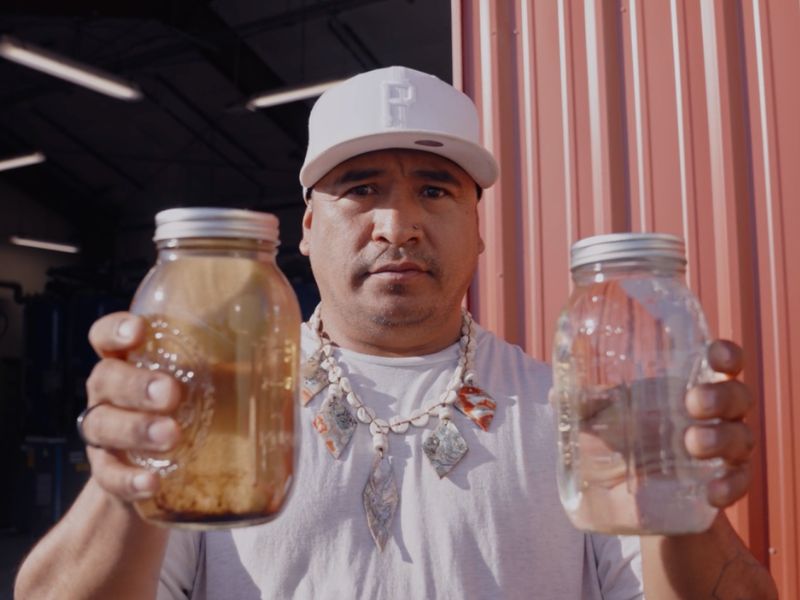
Across the United States, tribal water systems are often defined by aging infrastructure, limited treatment capacity, and regulatory obligations that mirror those of larger municipalities without the same access to capital or technical resources. For many tribal governments, addressing water quality challenges requires infrastructure solutions that can operate reliably at smaller scales while remaining adaptable over time.
At Big Valley Rancheria in Lake County, California, the Big Valley Band of Pomo Indians recently completed a water treatment system upgrade that addresses these structural conditions. The project was completed by ATEC Water Systems, a subsidiary of Cadiz Inc., using a treatment system designed to serve small, rural, and tribal utilities.The facility treats up to 100 gallons per minute and serves approximately 1,400 people. The system is designed to address contaminants including iron, manganese, ammonia, and corrosivity, while operating automatically to reduce downtime and operational strain.
Infrastructure Built for Small-System Realities
Unlike large municipal utilities, tribal water systems often must balance limited staffing with complex treatment requirements. Systems that rely heavily on manual operation or frequent shutdowns can create service disruptions that are difficult to manage locally.
The ATEC system installed at Big Valley Rancheria uses modular filtration vessels that allow treatment capacity to be adjusted without redesigning the entire facility. This approach aligns with broader trends in small-system water infrastructure toward scalable designs that can respond to changing regulatory standards or population needs.
“You can have a small plant for anywhere from a couple hundred gallons a minute to up to thousands of gallons a minute,” said Ben Ray III, CEO and Tribal Administrator for the Big Valley Band of Pomo Indians. “You can use the same vessels to take out different types of contaminants from the water system.”
Operational Continuity as a Public Service Issue
For operators, continuity of service is as critical as treatment effectiveness. Automated backwashing cycles in the system are designed to occur without interrupting water production, reducing the risk of outages that can affect daily life across the Rancheria.
“The most interesting part of the system is not having the downtime for backwashing cycles,” said Leon Fred, lead operator. “We don’t even really notice when the backwash goes on because it’s automatic and there’s no loss in production time.”
By minimizing operational disruptions, the system allows local staff to focus on oversight rather than constant intervention, an important consideration for utilities with limited personnel.
Water Infrastructure and Tribal Governance
For tribal governments, infrastructure projects are inseparable from governance. Maintaining ownership and operational authority over water systems allows tribes to set priorities based on community needs rather than external service constraints.
“Our community is the Big Valley Band of Pomo Indians,” said Tribal Chairman Flaman McCloud Jr. “The tribe really prides itself on its sovereignty. Part of that is water sovereignty.”
The completed facility now functions as a permanent piece of public infrastructure under tribal control, supporting residential use, public facilities, and long-term planning at Big Valley Rancheria.
A Broader Context
ATEC Water Systems has partnered with more than a dozen tribal communities since 2008, focusing on treatment solutions designed around local groundwater conditions and operational capacity. At Big Valley Rancheria, the system reflects a model increasingly pursued by tribal utilities: infrastructure that is technically robust, locally operated, and designed for longevity rather than short-term fixes.
In that context, the project is less about transformation than durability, ensuring that access to clean drinking water remains stable, manageable, and governed by the community it serves.
The photo in the article is provided by the company(s) mentioned in the article and used with permission.